CONVERSATION
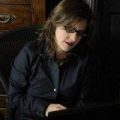
Bay Area author and memoirist Dorothy Lazard, one of 13 children, lived in a segregated St. Louis neighborhood until the age of nine. She moved to San Francisco in 1968 during what she calls “the winter after the Summer of Love.”
The Haight-Ashbury, where she and her family lived, was quickly losing luster as the center of peace and love, but for Lazard it was a place of freedom, refuge, and creativity — and at the time one of San Francisco’s few nonrestricted (a.k.a. non-redlined) neighborhoods.
I first met Lazard in 1990 when she was the head librarian at what was then called the Women’s Resource Center at U.C. Berkeley. She was my boss, a bit circumspect on the surface, but with the driest, snarkiest wit around. I immediately fell in love. She was my people.
Lazard went on to become the head librarian of the Oakland Main Library’s history center and lives in Oakland’s Laurel District. She is this year’s winner of the Oscar Lewis Award for achievement in Western history from the Book Club of California. Her new memoir, What You Don’t Know Will Make a Whole New World, details her formative years in the Haight-Ashbury and Western Addition.
The conversation has been edited for length and clarity.
The Frisc: What brought you to San Francisco in 1968?
DL: My mother, my brother, and I were brought to live with our grandmother. Our grandmother had come to St. Louis to retrieve us. We were in an orphanage, [although like us] very few of those kids were orphans.
My uncle Melvin had come out here for work. He was really the family pioneer. He had come to check it out, goes back and reports, “There’s gold up in them thar hills!” He convinces his mother, his brother, his sisters, and father to move. And they lived in the Western Addition on streets like McAllister and Golden Gate.
When we moved in 1968, my grandmother had moved out of the Western Addition to the Haight-Ashbury — it wasn’t called Cole Valley then. She moved to Cole Street, around the corner from Grattan School. Uncle Melvin lived downstairs. We had a duplex — 1137–1139 Cole.
Was the Haight-Ashbury majority Black at the time?
Pretty Black. I didn’t feel I was the only one. I wasn’t the fly in the sugar bowl anymore. Grattan School was really mixed. It was fabulous, because I hadn’t been in a mixed environment of any variety. [In the Haight], we had Filipino kids, Mexican kids, all kinds of kids.
And hippie kids?
And hippie kids. The hippie kids were mostly white. Hmmm… I think all the hippie kids were white. In my head, there were white people, and then there were hippies, and then there were Black people. The hippies had their own race — just weird. The weird race.
It sounds like you were kind of a free-range kid.
We were all free-range kids. But I think I was free-range in a way my cousins were not, because they had very engaged and disciplinary parents. Whereas my mom was sick and kind of dependent on me and my brother. [She had epilepsy.] So we were free-range even before we got out here. I had this ad hoc parenting, where my aunt was in control, my grandma was in control.
At Grattan, you had a really mean teacher. And racist.
I thought so. Black kids at the time were expected to be quiet and respectful and “don’t outshine the white kids.” But the thing that made me think “she is racist” is when she drove my head into the coat hook [in the cloakroom] and said, “Go back to your seat, you’re answering too many questions.”
Basically, they were teaching us to play small at a time of life where you’re supposed to be expanding your mind, your experiences, your attitudes about other people.

But you had good teachers too.
Mr. Eckhart introduced me to geography and history, and how they blend together. He was very cool, very cool. You know, fourth grade in California, it’s about the missions and Cabrillo and Anza and Balboa and all these really sanctimonious explorers. Nothing that represented me. [But] he was very encouraging, very experiential. He took us to the Japanese Tea Garden to learn about Japan, and he had all these maps on the wall of all these different places, he just brought learning alive.
And there were all kinds of people running around the neighborhood. It was the Summer of Love, right?
It was the winter after the Summer of Love. Whatever had brought all those young people had already started to spoil. There were a lot of drug overdoses, a lot of the kids were runaways, there was a whole conflict around that. Not that a little kid would have understood. But it had started to look kind of dingy, not this bubbly fantastic thing that you now hear about.
‘I spelled it out: O-C-E-L-O-T. Ocelot. My grandmother is like, You can’t have that cat. That cat’s gonna turn into a tiger and eat everybody in the house!’
Were the hippies friendly to you?
I thought so. When you are a little kid and the world that you’ve known is segregated and you’ve just arrived in San Francisco in this really mixed community, they were a wonder. I was just like, “Why are all these white people dirty? Why are they poor?”
My grandmother had to explain to me, “A lot of these kids aren’t poor. Their parents are professors and doctors and lawyers, and they ran away.” But I couldn’t figure it out based on white life that I knew, which was only the sanitized TV version. “Well, Leave It to Beaver doesn’t look like this. What happened to these people?”
Grandma was like, “Do not waste your sympathy.”

And they looked funny!
They looked funny, and they smelled funny. They smelled like patchouli, which I still can’t stand.
But the people that we knew … Donovan in my fourth-grade class was nice. He was just a dirty hippie kid, who, as soon as he got out of school, took his shoes off and ran around barefoot. And I loved the hippie store on Cole Street.
Everything was free, right? You have a great story about finding an ocelot there up for adoption.
Well, you would just go in, say a few words, and they’d give you something. A lamp, a toaster, a brooch, a caftan with paisley on it. And then they had this cat in the window. So I dragged my grandmother down there to tell her how it works, that you just go in and take something. So she’s looking at things and very gingerly picking them up.
Then I tell her they have this cat. And she’s like, “That don’t look like a right cat. Something’s wrong with that cat.”
‘It seemed a little bit wild and woolly, California that first year, because there were so many things new and different and unexplained. And tragic. It took a lot out of me. It was a lot to process.’
I said, “No, no, no. It’s a cat. Look how little and cute it is.”
The cat was rubbing the bars of the cage he’s in, being very seductive as cats do. But my grandmother was suspicious. I didn’t know how to say the word [on the cage sign], so I spelled it out: “O-C-E-L-O-T. Ocelot.” The sign explained, “native to Latin America.” My grandmother is like, “You can’t have that cat. That cat’s gonna turn into a tiger and eat everybody in the house!”
So yeah. I didn’t get the cat.
I went back maybe a week later, and somebody had gotten the cat — maybe Animal Control. I missed out on it, and I was so mad.
I would want that cat. What else do you remember from the neighborhood?
I loved the pierogi store on Cole near the N-Judah tunnel. And whenever I had enough money, I think they cost 30 cents, I’d go in and get one. And Mac, up the hill from us, that first block after Alma, that’s where we would get sandwiches. It’s going to make me sound like I’m a thousand years old, but for 25 cents we’d get a hero sandwich.
Maud’s — the lesbian bar — we’d peek in. And then some kids would scream, “Bulldaggers!” and we’d run, but none of us would stop to ask, “What’s a bulldagger, again?” We were just these crazy kids running around trying to figure everything out. Maud’s, it was always dark in there, which was fascinating. Knowing what I know now about LGBT suppression in the ’60s, I’m not surprised.

The door was often open and kids, sometimes they’d throw rocks in and the lesbians would throw rocks back at them. It was across the street from Cole Hardware.
I just liked wandering around. The architecture was different, the climate was different. I always had a cold, because it was so cold here. It never got hot.
The Park Theatre was on Haight. It had turned into a porn theater, kind of like “man in a raincoat” kind of vibe. I remember one Christmas we were all to come over to the East Bay to some relative’s house. And my grandmother said, “Where’s Albert [my older brother]? Go find Albert. We’re about to go.”
And so I’m looking all over the place. I’m just roaming the streets. I get all the way down to Haight Street. and I know my brother and I are fiends for the theater. I asked at the window, “Is my brother in there?”
And they said, “Who’s your brother?”
“Can I just go in there and find out?”
It’s just like, “No, I’ll go check.”
And he came out. They tore down that theater and built a Goodwill there.

You were in San Francisco when Martin Luther King, Jr. died. What was that day like?
I didn’t have any understanding of the Civil Rights movement or Martin Luther King. I was sitting in the parlor of our flat on Cole Street. Our family had just arrived three weeks earlier. There’s a newsflash and Walter Cronkite comes on: “There’s been a shooting in Memphis. Martin Luther King has been shot.”
And suddenly my grandmother came home, barreling up the stairs, very animated, and we still had the TV on. They report that Martin Luther King has died. My grandmother cries and eventually I wander outside and there’s a cluster of little kids. We were feeling very bewildered. It seemed important, kind of scary, you started to hear people holler out: “Did you hear? Did you hear?”
I remember the sound of ambulances. More people were coming home than would have been at that time of day. Before I left the house, my grandmother had started praying and my mother was just [shaking her head] going, “Mmm, mmm, mmm…” Which wasn’t a good sign. You get that Black lady head shake.
The kids were stressed and somebody thought up this idea: “Let’s go beat up some white people.” We wandered down the street, looking for somebody. We get a couple of blocks away and this man crosses the street diagonally, this Black man, and he’s like, “You guys get home! You get home right now!”

He was rushing, looking distressed, and we bolted in different directions home. The rest of the evening, there was just news on, news, news, news.
It seemed a little bit wild and woolly, California that first year, because there were so many things new and different and unexplained. And tragic. Bam! Martin Luther King gets killed. Six weeks later — bam! — Bobby Kennedy gets killed, pretty much on TV. And then in the summer you get the Democratic National Convention riots in Chicago. It was just one thing after another, nationally and locally. So it took a lot out of me. It was a lot to process.
It was also a time of musical growth and experimentation. What did your family listen to?
I had just left the orphanage where we were lulled to bed with Broadway show tunes, so it was fascinating to come here and discover the Delfonics and Stevie Wonder, who was turning into a teenager. We were discovering just how good Aretha Franklin was, and right before we got out here, Otis Redding had been killed in the plane crash. “(Sittin’ on) the Dock of the Bay” was the hit song.
It was my mother’s favorite, and I think it resonated with her because she had lost so much of her parental authority and agency due to her illness. Otis Redding wrote it in Sausalito.
It just felt really inspiring to be a Black kid at that time, because the world had started to open up for us in a way it hadn’t for earlier generations. We saw ourselves on TV, we could go to the record store and buy any number of records. Amoeba wasn’t there. The place that became Amoeba was a bowling alley.
I can imagine you walking down Haight Street and Jefferson Airplane is coming out the windows.
I knew about Jefferson Airplane and the Mamas and the Papas, and we had our integrated things like Sly Stone. They were absolutely the crossover band. My grandmother knew him when we lived on Pine Street, because I remember babysitting for his sister Rose. It’s just like, “Didn’t I see you on Ed Sullivan?”
My grandma knew all kinds of people, preachers and pimps and prostitutes. She knew Sly Stone because she knew his mother or something like that.
The interesting thing about segregation is that, in a way, it makes your world small, but in a way it makes your world tight, and integration kind of pulled us away from each other.
I have a fondness for San Francisco that remains. Gerald [my husband] will tell you I can’t go over without pointing out something: I went to that school, or that school was called this back in 1970, or this is where I won the kickball championship. Every time I go down Geary past St. Monica’s, it’s, “This is where we beat all the Catholic schoolgirls!”
So I’m still acting as tour guide to my own life.
Maria De La O is a writer, editor, and producer of The Promised Band, about a fake band in the Middle East, and Last Call for Alcohol, a documentary short about the closing of SF’s Lucky 13 neighborhood bar.