[Editor’s note: Part 1 of our year in review — housing and homelessness — is here.]
San Franciscans grappling with changes to their streets and other common spaces, the pandemic spurred new ideas and sped up old ones. In short: Less room for cars, more for people and other forms of transit.
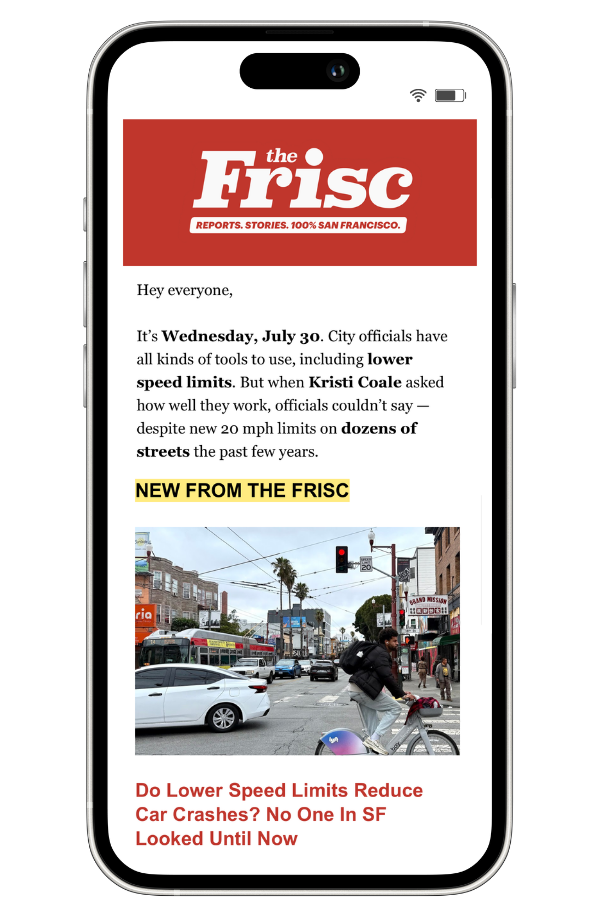
In 2023, we saw how tough it is to turn ideas into reality. As Kristi Coale reported, SF is failing to meet its “Vision Zero” goal of ending traffic deaths by 2024. Fatalities and serious injuries remain stubbornly high, and certain streets and intersections are notoriously dangerous.
Officials know what works, but making more than cosmetic changes is never easy. Perhaps new tools — a ban on right turns at red lights, speed cameras, and more 20-MPH speed limits — will make a real difference.
A prime example of how change is tough is on Arguello Boulevard, a prime north-south bike route. A pro cyclist’s death there in April spurred calls for protections. An SFMTA official noted the “urgency of the situation,” but to date the city hasn’t touched the part of the street where it has jurisdiction.
Another example is Valencia Street. The dense commercial strip has been a key bikeway for decades. New experimental bike lanes, running down the center, opened on Aug. 1. Even before it opened, the configuration was raising hackles among bikers and merchants.

SFMTA promises a permanent solution (coming next year, perhaps?) will incorporate lessons from this pilot, but the controversy foreshadows more fights when the agency unveils a new citywide bike plan, called Active Communities. SFMTA planners spent this year getting community feedback. We should see a draft early in 2024, and it’s supposed to emphasize the needs of historically disadvantaged neighborhoods like the Tenderloin and Bayview.
The citywide plan will incorporate many slow streets, which began during the COVID lockdown as extra breathing room for residents. Some have become car-free fixtures, like what’s now called the JFK Promenade in Golden Gate Park. In the neighborhoods, some have been more successful than others keeping the flow of cars slow and low.

In a year of dire fiscal warnings for San Francisco public transit, there were two bright spots. The 49 Van Ness line debuted its “rapid” route. And on Geary, after 20 years of fighting, the last leg of the “red carpet” solution was approved. It’s a watered-down version of what has transformed Van Ness. But riders of both lines have rejoiced in faster trips on two of the city’s busiest corridors.
Still, SFMTA, which oversees transit and streets, is facing budget cuts like all city agencies, and cannot afford to wait for downtown commuters to return with refilled Clipper Cards. Despite glimmers of hope, the office vacancy crisis is dragging on into 2024. One local commenter called for an overhaul of the transit map to reflect new realities.

Another pandemic innovation seems here to stay: restaurant parklets. Not all owners still need them, or perhaps the cost-benefit balance no longer makes sense, as material costs rise and new rules and fees take effect. But early returns this year were strong; some owners love them enough to fight for them. With nearly 2,900 applications filed and about half approved, San Francisco — often cited as the most European of American cities — will have hundreds if not thousands more outdoor dining and drinking spots to help match that claim.
Public schools: Many reforms, tough budget math
In the SF public school district, the word of the year was crisis. Coming out of the pandemic, student absenteeism was up, math and reading outcomes were down, a busted payroll system still hadn’t been fixed (spoiler alert: it still hasn’t), and talk of a teacher strike was brewing. A 7 percent drop in enrollment, now under 49,000 students, was fueling budget woes; SFUSD had only avoided cuts the previous year thanks to a temporary state windfall.
SFUSD began 2023 promising reform and had some stability at the top. (The fall 2022 elections brought only a small change to the school board.) Twelve months later, what’s the report card?
The payroll system is better but still making errors that affect people’s lives and livelihoods; after more than a year (and millions of dollars spent) on consultants and repairs, Superintendent Matt Wayne admitted this fall it could be scrapped. An expensive replacement seems inevitable.
After much gamesmanship, a strike was averted with hefty raises for teachers and other staff. How many teachers will enjoy those raises remains to be seen. Facing a $420 million deficit, the district can no longer stave off budget cuts, which means potentially fewer teachers and staff (the main union currently has more than 6,500 members) and schools. SFUSD said last month it won’t fill more than 900 vacant positions to save cash. The school closure debate — the third rail of local school politics — will come to a head this spring.
SFUSD is also keenly aware that its public image has taken a hit. A $1 billion bond for badly-needed school construction and repairs was pushed back to the November 2024 ballot amid fears that voters could rebel against it. Meanwhile, many schools await big fixes.

Since the pandemic, the district’s adults have promised to put students first. Easy to say, harder to realize. But reforms continue at every level: a literacy overhaul in elementary school; a change in math curriculum, including the potential return of algebra to middle school; and in the district’s 17 high schools, rethinking courses, college and career readiness, and admissions — Lowell High’s controversial status in particular.
Farthest along is literacy, fueled by nationwide evidence that the most popular reading curriculum for decades, known as whole-language learning, has failed. A pilot program of new methods and testing tools in a few elementary schools should lead to SFUSD-wide changes starting next fall.

The district is also signaling a return of algebra to 8th grade for those who want to take it. Still, a group of parents continues to force the issue with a lawsuit, despite a judge looking skeptically upon it this summer. A new math plan for 8th grade algebra and more should be up for a vote early next year
.On the contentious issue of Lowell admissions — part of a larger package of high school reforms — SFUSD has made no decisions. But in November, Sup. Wayne floated a compromise: admission standards based on grades but not essays or tests. For Ruth Asawa School of the Arts, the only other high school with selective admissions, auditions would have more central oversight.
The admissions changes would start rolling out in the 2025–26 school year, with other reforms starting in fall 2024. SFUSD’s broad goal is to boost 12th graders’ college and career readiness to 70 percent, up from 57.5 percent in 2020.
For all these reforms, in fact, the district says 2027 will be the ultimate year to measure progress. But families, teachers, and students want progress in exchange for their patience. With the massive bond and more school-board seats up for election in the fall, 2024 is a number the district can’t ignore.